For Three Weeks, Edinburgh Becomes Something Else
Quick answer
The Edinburgh Festival Fringe transforms the city every August with thousands of comedy, theater, music and experimental performances in spaces across Edinburgh.
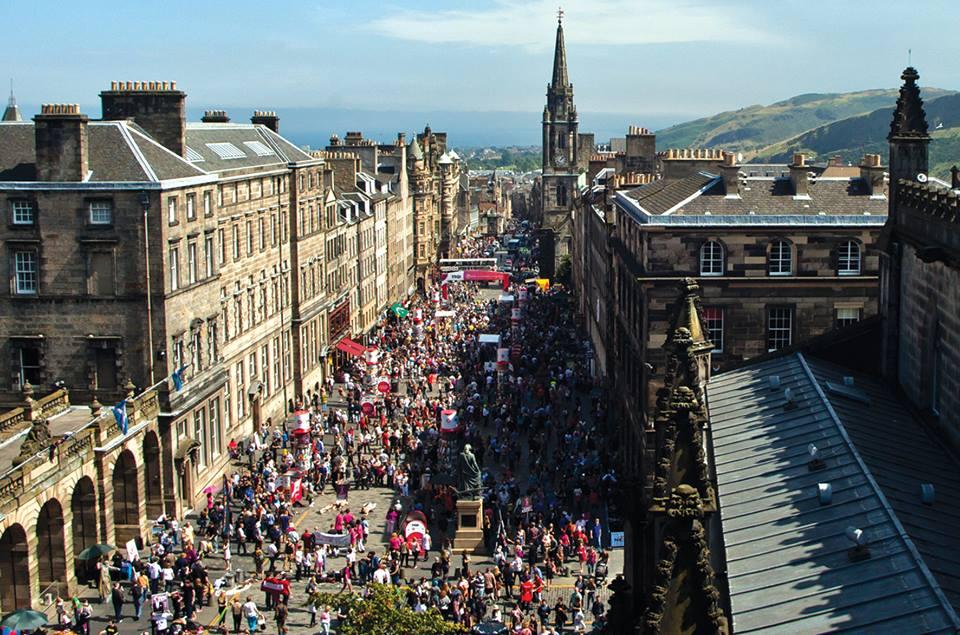
Every August, Edinburgh stops behaving like a normal city. The streets get louder. Basement rooms turn into theaters. Bars become performance spaces. Churches, classrooms, hotel conference rooms, back rooms, courtyards and almost anything with enough space for an audience suddenly have a show happening inside them. That is the Edinburgh Festival Fringe. It began in 1947, when eight theater groups showed up in Edinburgh without being invited to the Edinburgh International Festival and performed anyway. That accidental act of showing up became the foundation for what is now the largest arts marketplace in the world. The basic idea is still surprisingly simple: if you have a show and can find a venue willing to host it, you can be part of the Fringe. There is no central committee deciding who deserves a stage. That openness is what makes the whole thing feel different from almost any other festival. You can see an established comedian at night and, an hour earlier, stumble into a tiny room where someone is performing their first show to twelve people. You can watch theater in the afternoon, cabaret after dinner, stand-up at midnight and something that is nearly impossible to describe at 1:00 in the morning. Nobody is really finished. That might be the defining quality of the Fringe. Performers are rewriting things between shows. Comics are changing jokes because of something that happened twenty minutes earlier. Flyers are being handed out by the same people whose faces are printed on them. Audiences become part of the ecosystem because every person walking down the street is potentially the person who fills the last seat in a room. For 2026, the Fringe runs from August 7 through August 31, with 3,649 shows in the official programme from artists representing 71 countries. Those numbers are big, but the experience is strangely small. A lot of the Fringe happens five feet away from you. Someone approaches with a flyer. Someone overhears you talking about a show and recommends another one. A performer you watched yesterday is sitting next to you today. You begin recognizing the same faces on the same streets. And because there are thousands of shows competing for attention, nobody can really coast on reputation. Everyone is trying to earn the next audience. That includes performers who are already successful. The Fringe has household names, new artists, experimental performers and people who aren't quite sure what their show is yet. The official Fringe Society describes it as an arts marketplace where roughly 3,500 shows register in a typical year, alongside thousands of industry professionals and members of the media looking for work and talent. But walking around Edinburgh, it doesn't feel like a marketplace. It feels like organized artistic chaos. A person carrying a prop sword is walking beside someone dressed normally except for enormous angel wings. Someone is rehearsing in an alley. Another person is trying to convince you that a show about municipal waste management is actually hilarious. And occasionally, they're right. Comedy is a huge part of the Fringe, but it never completely owns it. That's one of its strengths. Stand-up exists beside dance, theater, music, circus, spoken word, cabaret and forms that seem to have been invented specifically because nobody told the performer they couldn't invent them. St. Marks Comedy Club is taking part in the Fringe this year too, which makes the whole thing especially fun from New York. But once you're in Edinburgh, individual venues and cities start feeling less important. Everyone becomes part of the same temporary neighborhood. That's probably why people keep coming back. The Fringe isn't really about seeing one particular show. It's about spending a few days in a city where somebody is always about to walk onto a stage and try something. And for a few weeks every August, Edinburgh seems perfectly happy to let them.
Explore more at St. Marks